Writing
Blog
Essays, original experiments, and honest comparisons.
Essays

How Many Calories to Lose 1 Pound a Week
Learn the exact mathematical formula to lose 1 pound a week, including a worked example of calculating your calorie deficit.

How Many Calories to Lose Half a Pound a Week
Learn the math behind losing half a pound a week. Calculate your daily calorie deficit, review worked examples, and estimate your target calorie budget.

Do you actually need a multivitamin (especially on a calorie deficit)?
The big prevention trials say a multivitamin won't save the average well-fed adult from heart disease or cancer. But 'won't prevent cancer' and 'useless for you on a 1,400-calorie cut' are very different claims — and the gap is where the real answer lives.

Iron: the deep-dive deficiency guide
Heme vs non-heme, the vitamin C trick, the coffee-and-tea trap, and why iron is the one nutrient you should never supplement on a hunch — a full guide to the world's most common deficiency.

Magnesium: the deep-dive deficiency guide
Magnesium runs 300-plus enzyme reactions, most people eat less than the RDA, and a normal blood test can't rule a shortfall out — here's how to actually tell, and what to do about it.

Percent Daily Value, explained: how to actually read the micronutrient section of a label
That little %DV column on every nutrition label is the most useful number nobody taught you to read. Here's what it means, why it's not your personal target, and the one rule that turns it into an instant judgment.

Vitamin B12: the deep-dive deficiency guide
B12 is the deficiency you can't afford to sit on — the nerve damage can become permanent. Here's the absorption machinery, the drug interactions, and who needs to supplement.

Vitamin D: the deep-dive deficiency guide
Sun, diet, or supplement — who's actually deficient, when a 25(OH)D test is worth it, sensible dosing ranges, and the toxicity ceiling the supplement aisle never mentions.

Where calorie data actually comes from (and why two apps disagree about your sandwich)
Type 'turkey sandwich' into three different apps and you'll get three different calorie counts. That's not a bug — it's three databases with different origins, different rigor, and different blind spots. Here's what's behind the number.

GLP-1 medications and micronutrient deficiency: the overlooked risk
When semaglutide or tirzepatide cuts your intake by a third or more, you don't just under-eat protein — you quietly under-eat the vitamins and minerals that keep muscle, bone, and energy intact. Here's what to watch.

Signs you might be low on vitamin D, iron, B12, or magnesium
The symptoms of the four most common deficiencies are vague, overlapping, and easy to wave away — which is exactly why a blood test beats a symptom checklist every time.

Are you getting enough vitamins on a calorie deficit?
Cutting calories cuts micronutrients in lockstep — eat 30% less food and you eat roughly 30% less iron, calcium, and B12, right when your body can least afford the shortfall.

Budget-Friendly Breakfast Ideas for Morning Nutrition
Discover 15 budget-friendly breakfast ideas using pantry staples like eggs, oats, and beans to maximize protein while managing your daily calorie budget.

Meal-Prep Breakfast Ideas for Better Calorie Tracking
Discover 15 concrete meal-prep breakfast ideas with calorie and protein counts. Learn how to batch prep meals that store well and fit your daily budget.

Bulk vs cut vs recomp: a decision framework
A field guide to picking your phase based on bodyfat, training age, and time horizon — instead of vibes.

Filling Breakfast Ideas: 15 High-Satiety Morning Meals
Explore 15 specific, high-protein and high-fiber breakfast ideas designed to maximize satiety on a calorie budget for sustained morning energy.

The lean bulk math: surplus, timeline, and what you actually gain
How big a surplus you actually need, why 'just eat more' wrecks most bulks, and the natural-lifter muscle-gain ceilings that bound the math.

Low-Carb Breakfast Ideas: 15 High-Protein Morning Meals
Explore 15 specific low-carb breakfast ideas with calorie and protein counts to manage your daily energy budget efficiently and stay on track.

How much muscle can you actually build in a month?
Natural muscle-gain ceilings by training year, what social media gets wrong, and how to tell muscle from water and glycogen on the scale.

How much protein do you actually need? (RDA vs research vs lifter-real)
The RDA is the floor to not deficient, not the target for body composition. What 30 years of muscle-protein-synthesis research actually shows.

TDEE after 50: adjusting your calories for real aging (not the myths)
The metabolism does not collapse at 50. The largest study we have on lifetime energy expenditure shows TDEE stays stable through about age 60, then declines slowly. Most of the perceived slowdown is muscle and movement, not the furnace.

TDEE for athletes: why standard calculators underestimate you
Most TDEE calculators cap the activity multiplier at 1.9 and use BMR equations derived from sedentary populations. For endurance and high-volume athletes, the resulting estimate can be 30-50% too low.

TDEE for men over 40: testosterone, mass, and the real slowdown
Testosterone does decline after 40, but the metabolic impact is mostly indirect: less muscle, less daily movement, more alcohol that sticks around longer. The 'low T' label gets blamed for a lot of things it is not doing on its own.

PCOS and calorie deficit: why standard TDEE math often lies
Insulin resistance changes how a calorie deficit actually plays out. A 500 kcal/day deficit on PCOS frequently produces less loss than the formula predicts — and the fix is composition, not just a deeper cut.

Post-menopause calorie needs: why TDEE drops and what to do
After menopause, daily energy expenditure does fall by a real amount — about 100-200 kcal/day — but most of that is mass loss, not a direct hormonal slowdown. That distinction changes the intervention.

TDEE for women over 40: how your metabolism actually changes
The metabolism does not crash at 40. What does change is muscle mass, daily movement, and perimenopausal hormone shifts that quietly bend the activity multiplier down.

High-Protein Breakfast Ideas for Your Calorie Budget
Front-load your day with 15 high-protein breakfast ideas. Every meal includes specific calorie and protein counts to help you stay within your budget.

Low-Calorie Breakfast Ideas for Your Daily Energy Budget
Discover 15 specific low-calorie breakfast ideas to stay within your daily budget. High-protein recipes from 200 to 400 calories for better satiety.
Beer math: what your weekend bottle actually costs
Alcohol is 7 kcal/g — and that's the easy part. The harder part is that your body stops oxidizing fat for ~12 hours after a drink, which compounds the cost in ways your tracker can't see.
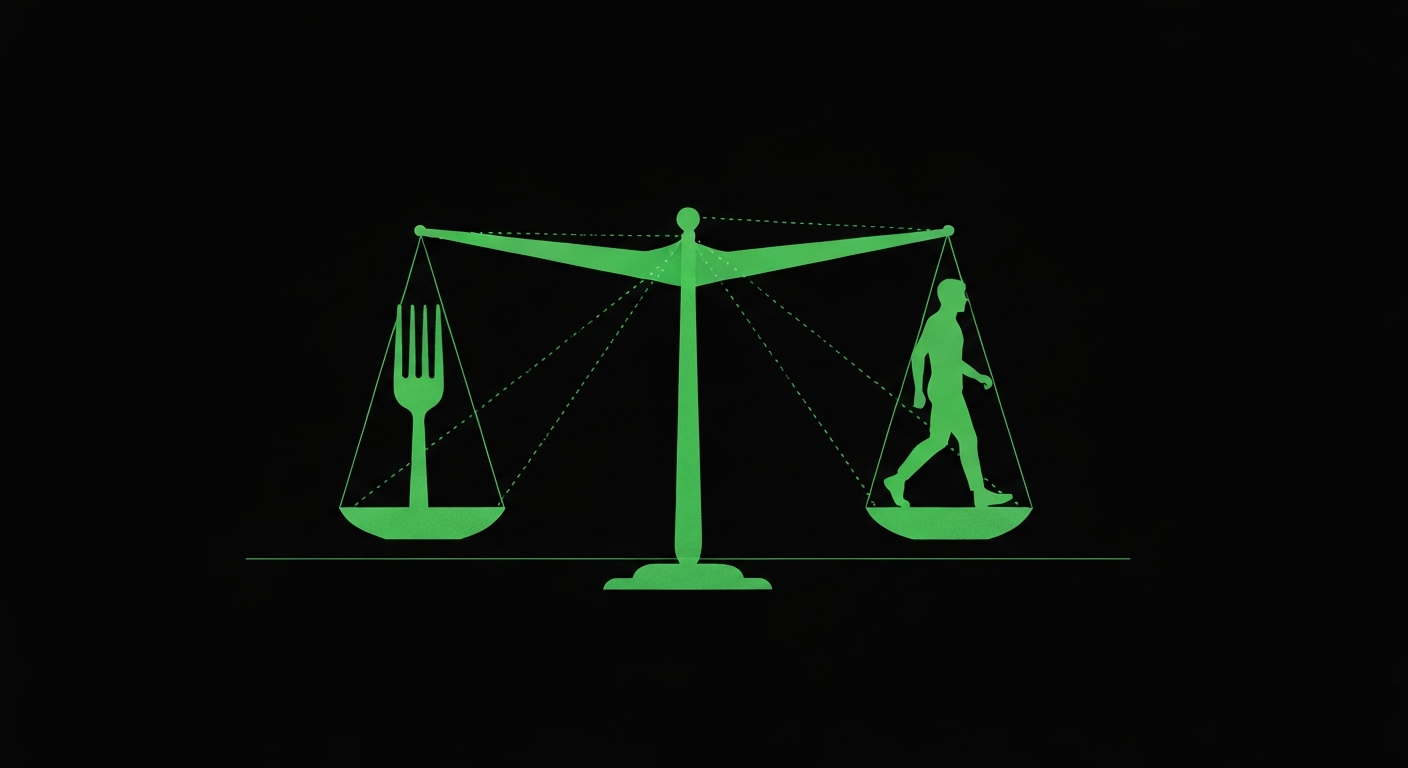
The buy-back mindset: physical alternatives to food guilt
Most diet apps treat overage as failure. The buy-back framing treats it as a transaction with a known exchange rate — and that one change makes deficits sustainable.
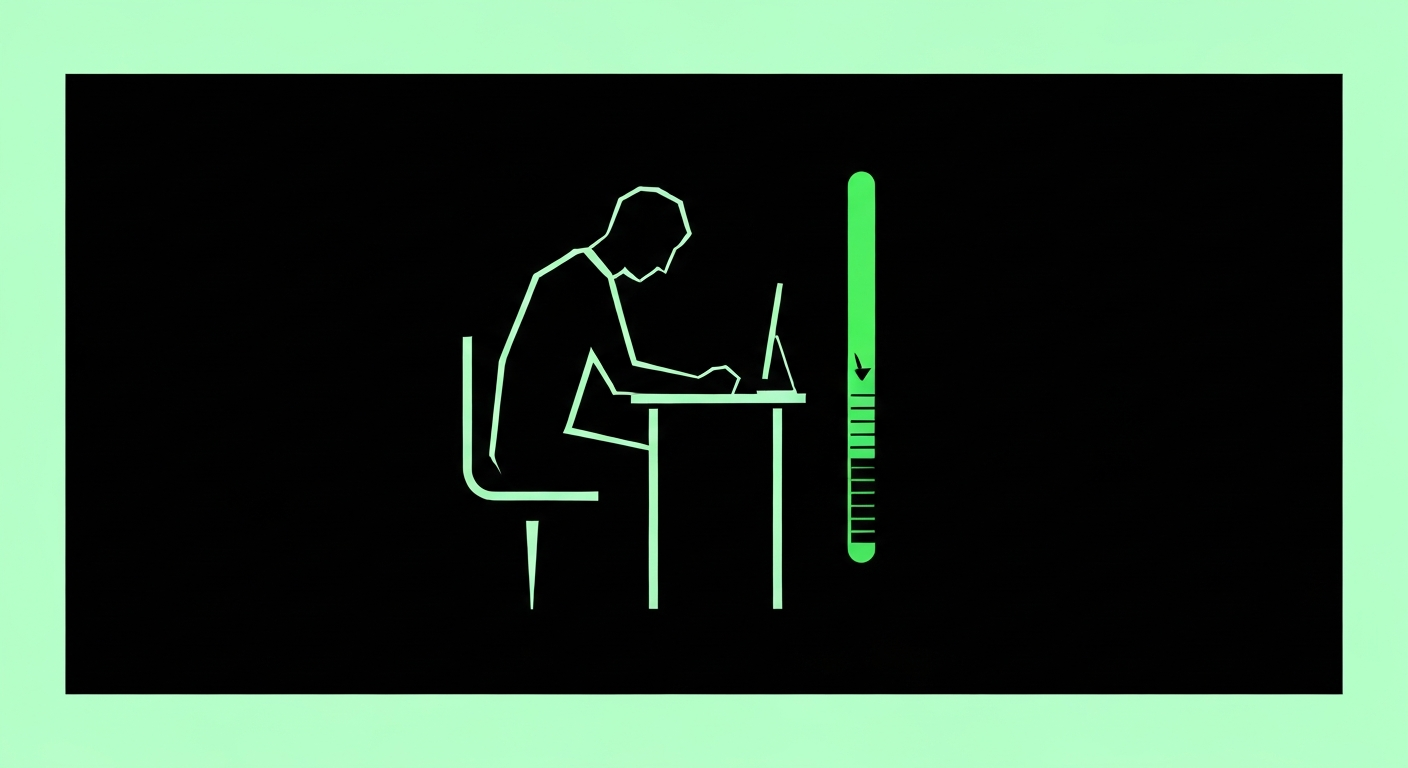
The desk-job tax: why your job costs you more than you think
If you sit 9 hours a day, your TDEE is roughly 350-600 kcal lower than the formula predicts. Here's where the gap hides and what to do about it.
Calorie tracking on GLP-1: what to track instead
If you're on Ozempic, Wegovy, Mounjaro, or Zepbound, calorie counting is the wrong primary metric. Here's the protein floor, hydration, and side-effect framework that actually matters.

The hand portion method, tested against a food scale
Precision Nutrition claims 95% accuracy. We compared hand portions against a calibrated kitchen scale for 12 common foods.

NEAT: the 500 calories you're not counting
Two people, identical inputs to your TDEE calculator, wildly different real-world burn. The answer is non-exercise activity thermogenesis — and it's the most overlooked variable in calorie math.

Pandolf vs MET: what your rucking watch gets wrong
The 1977 equation that still anchors load-carriage estimates — and the 12–33% it leaves on the table.
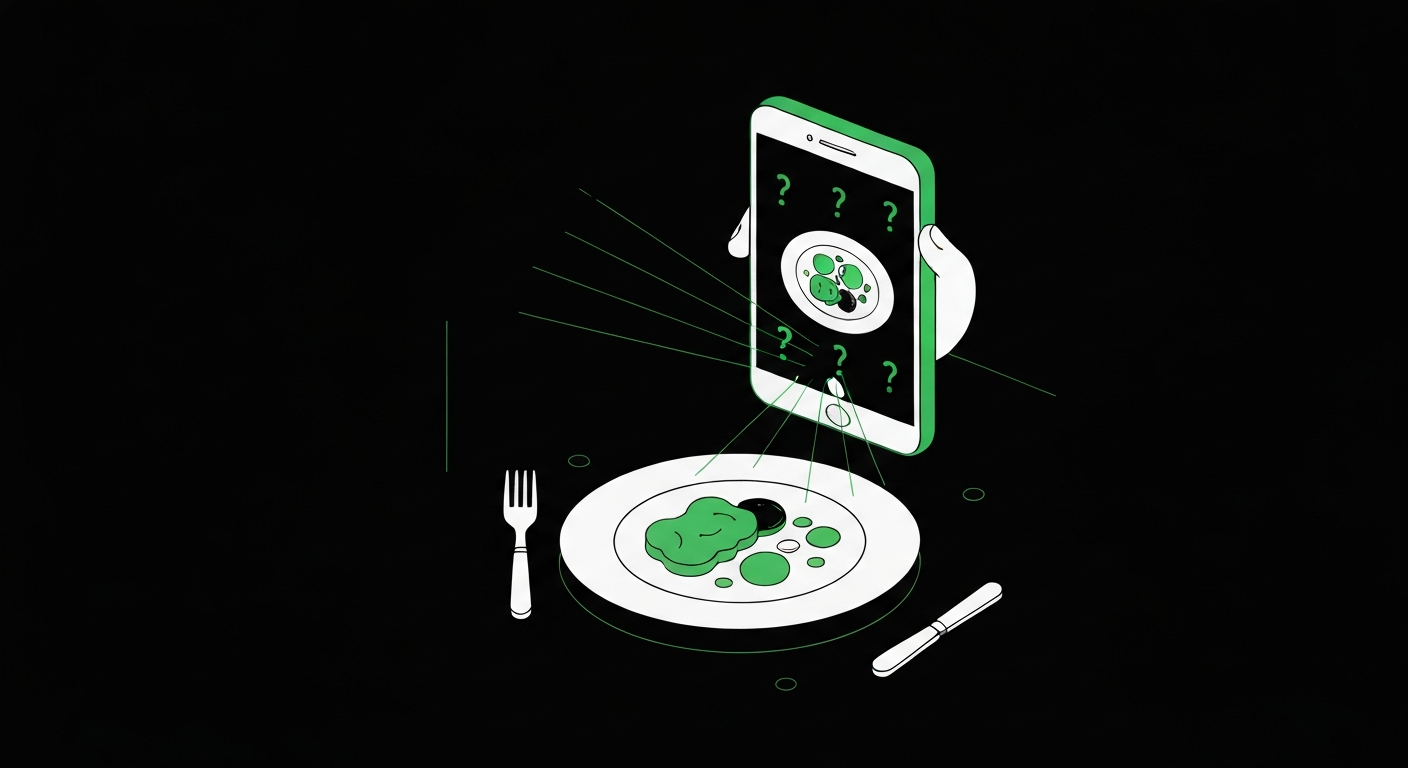
How accurate are photo calorie counters, really?
Vision models can name a Big Mac in milliseconds. Estimating its volume is the hard part.
Your scale stopped moving — diagnose it
Two weeks at the same weight isn't a metabolic curse. It's a diagnostic problem. Here's the 6-question decision tree to figure out what's actually happening.
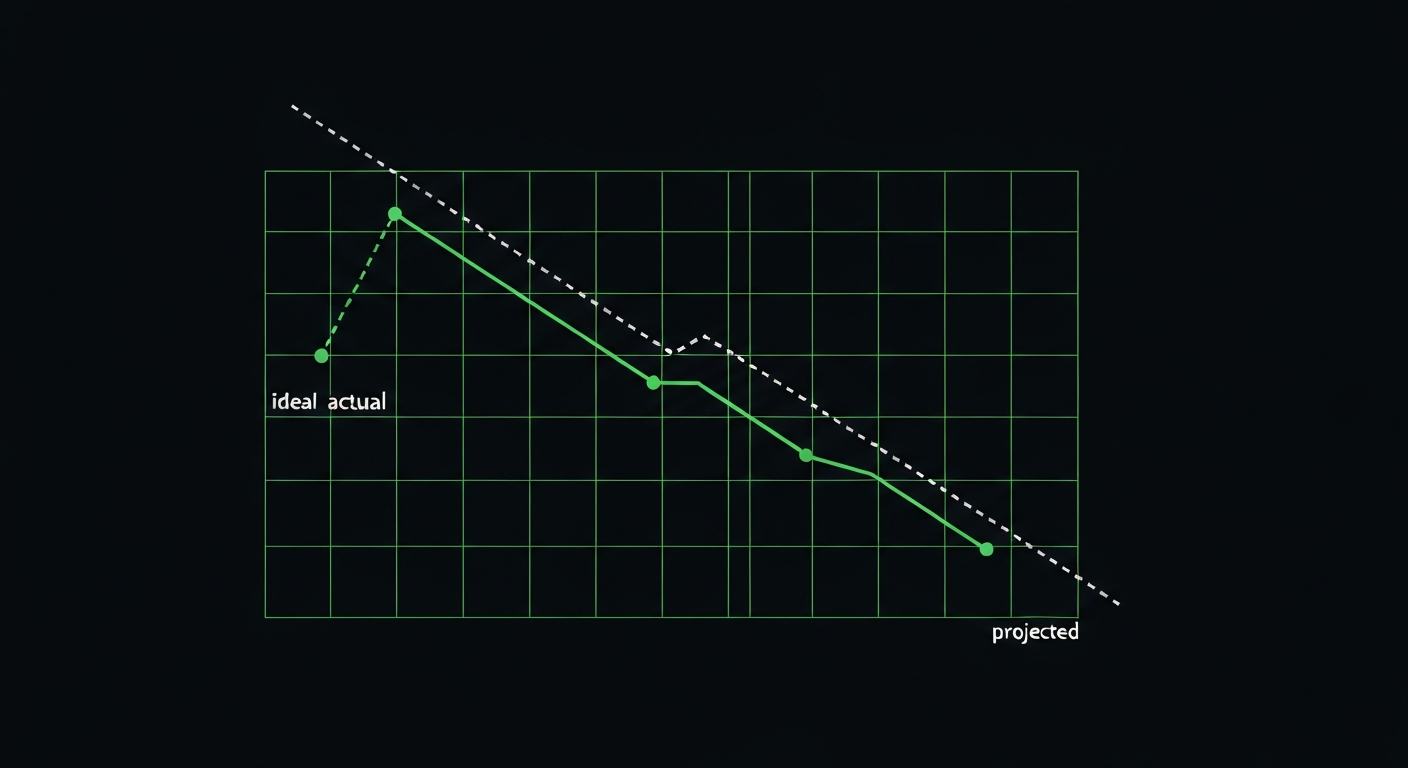
How to read a calorie burndown chart
Ideal line, projected line, actual line. What each one tells you about whether you're going to hit your goal — and what to do when they diverge.

When to eat at maintenance on purpose (refeeds and diet breaks)
Eating more calories isn't cheating — done right, it's a tool that restores hormones, reduces fatigue, and accelerates long-term loss. Here's the protocol.
Why restaurants kill your deficit (the 200% rule)
Restaurant meals average roughly twice the calories of an equivalent home-cooked version. Here's where the extra calories hide — and how to eat out without blowing the week.

Coming out of a deficit safely (reverse dieting)
Most weight regain happens in the first 6 months after you stop dieting. The fix is a slow, structured return to maintenance — not an immediate return to 'normal' eating.
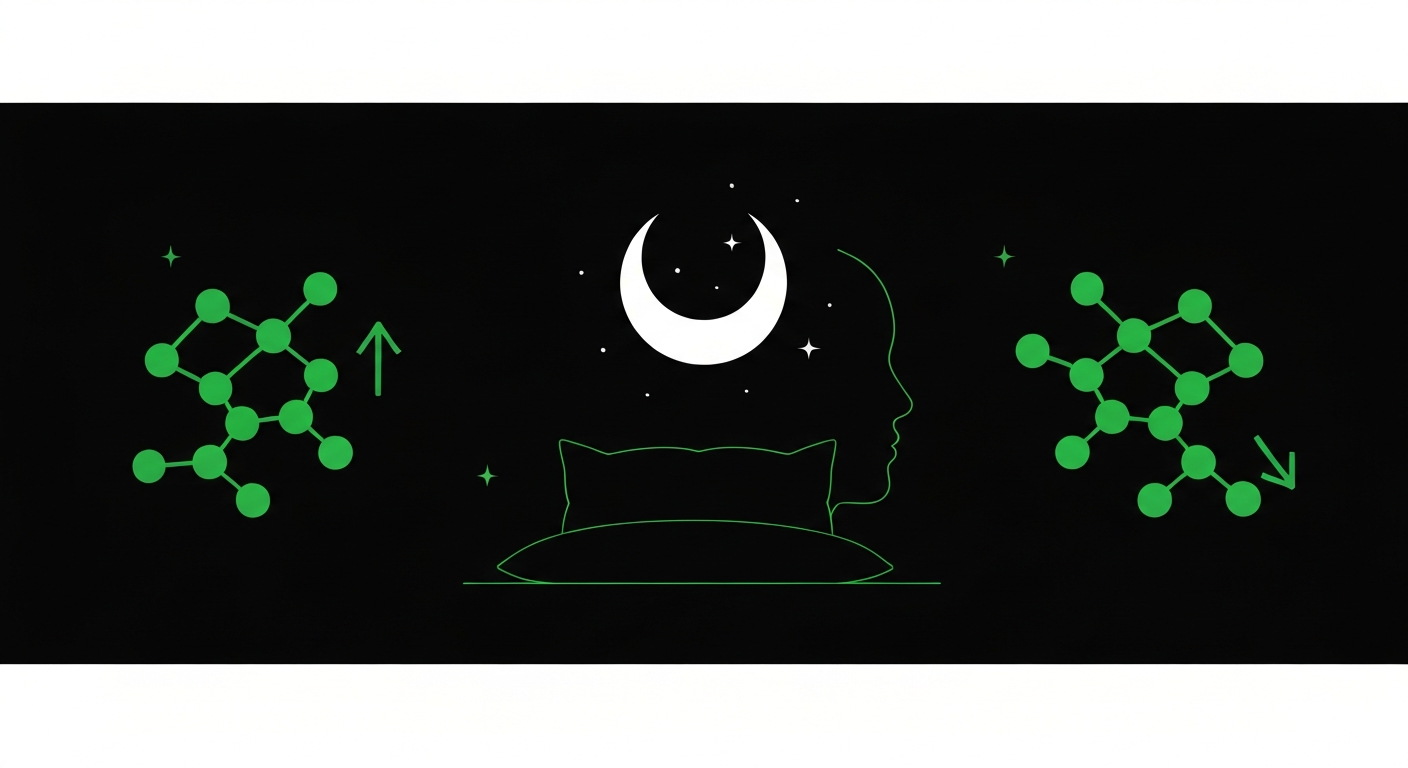
What 6 hours of sleep does to your hunger
Short sleep raises ghrelin, drops leptin, and reliably triggers ~300 kcal/day of extra intake the next day — invisible to your tracker but very real.

What the standing desk RCTs actually show
Standing desks were sold as a weight-loss tool. The actual published trials tell a more measured story — small effects on weight, real effects on lower-back pain, mixed effects on focus.
Why your TDEE calculator is wrong
Mifflin–St Jeor is the most accurate predictive equation we have — and it still has a 10% error band. Here's why, and how to correct for it.
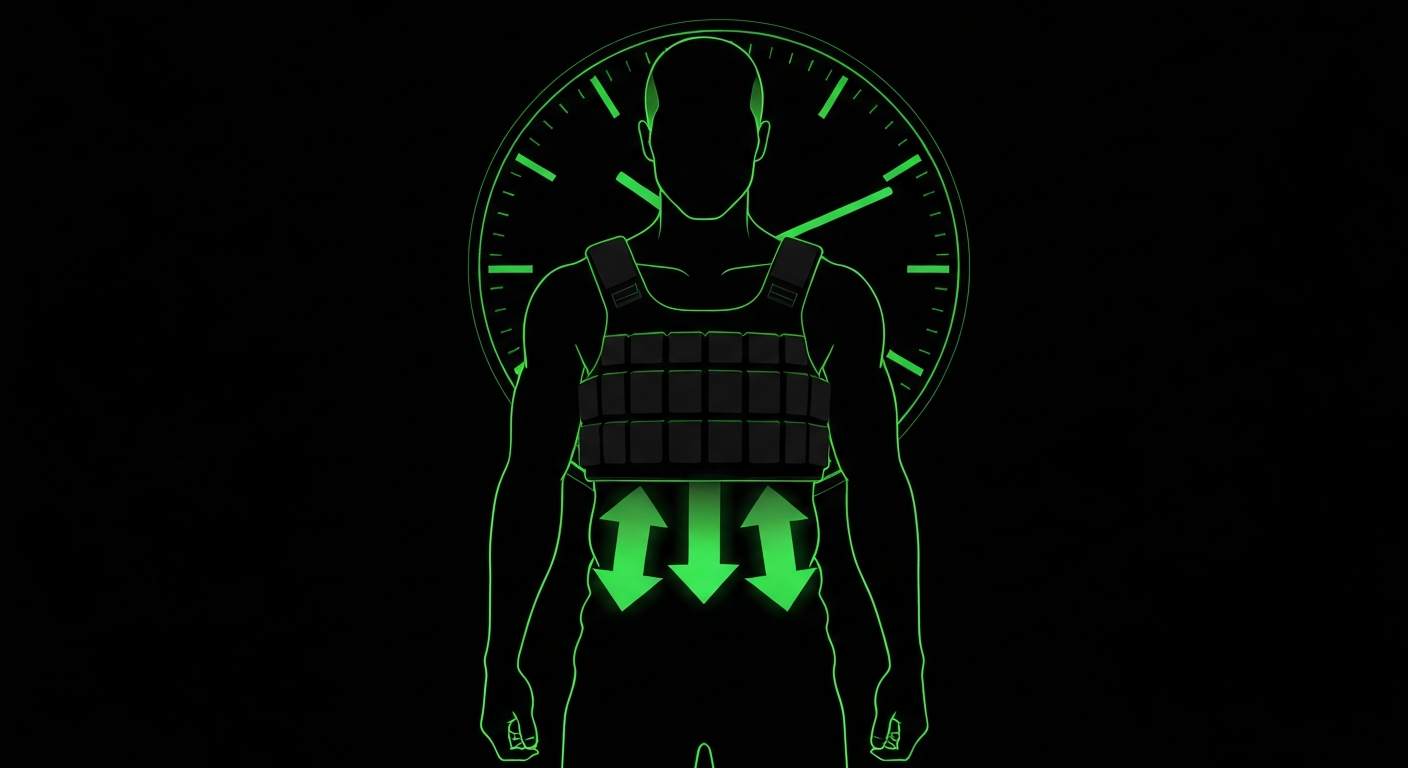
How a 20 lb vest changes a 30-minute walk
A worked example: same 30-minute walk, three configurations. Pandolf math shows why a 20 lb vest beats nearly every cardio choice for time-constrained people.
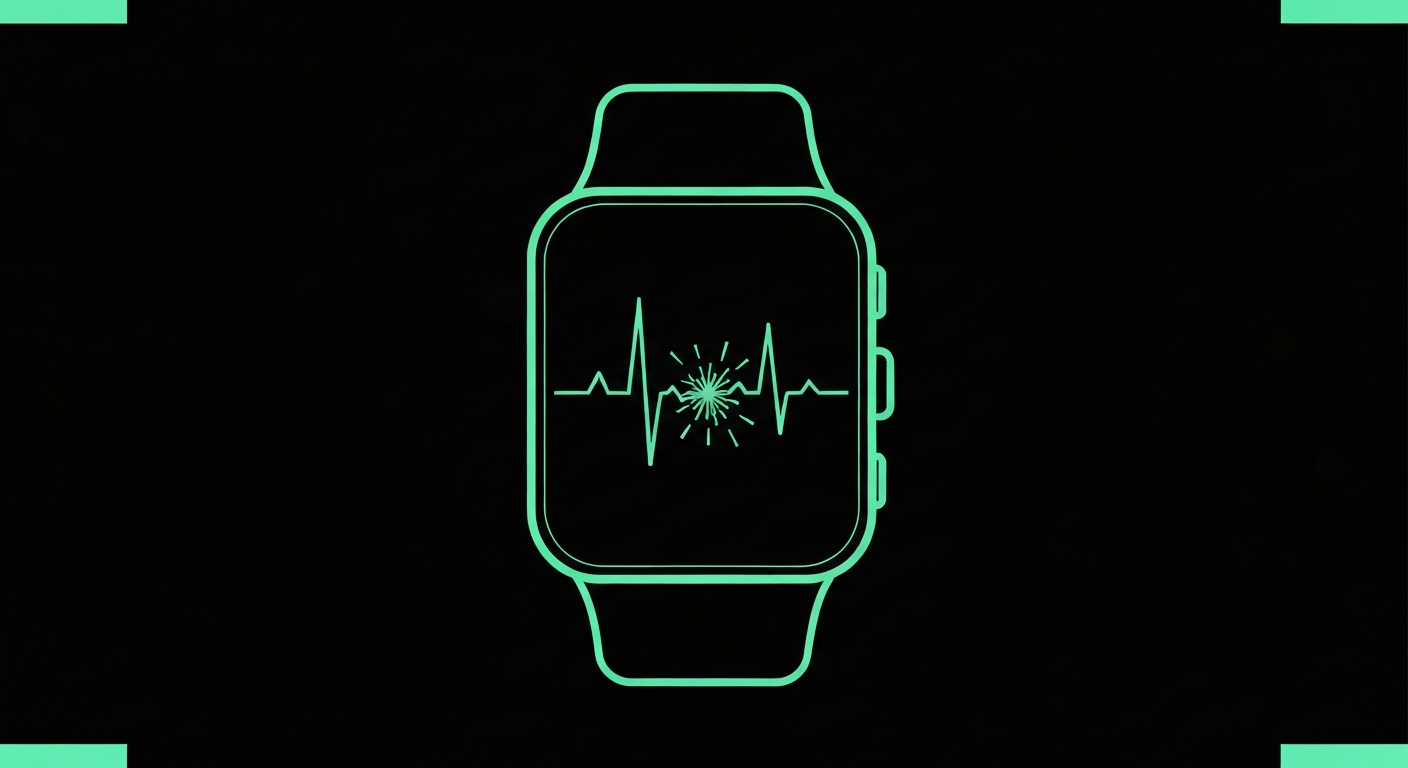
Why your Apple Watch (and Garmin and Fitbit) lies about calories
Stanford's validation studies found wearables get heart rate roughly right and calorie estimates roughly wrong. Here's where the errors hide and which numbers to trust.
Weekend drift: why Monday weigh-ins feel worse
The Saturday-Sunday calorie spike is the deficit-killer that nobody talks about. Here's why it happens, why Monday's scale looks dire, and how to plan for it without crashing.


Comparisons

Best Cal AI Alternatives in 2026: 7 Calorie Trackers Compared
Cal AI made photo calorie counting mainstream. Here are seven alternatives that fix its biggest weaknesses — speed, accuracy, coaching, pricing — ranked by who they're actually for.
Best Calorie Tracker for GLP-1 / Ozempic Users (2026)
Calorie counting is the easy part on GLP-1s. The hard part is hitting a 100+ g protein floor, tracking side effects, and preserving muscle. Here's which apps are built for that.

Cal AI vs MyFitnessPal vs MacroFactor (2026)
Three calorie trackers, three different philosophies. Photo-first speed, database depth, or adaptive coaching — pick the one that matches how you actually log.
CalBurndown vs Cal AI: which calorie tracker is right for you in 2026?
Cal AI nailed photo-first speed. CalBurndown nailed everything else.
CalBurndown vs MacroFactor: which calorie tracker is right for math-driven people?
Both apps grade themselves on a curve set by your real data. The difference is in the framing — adaptive expenditure modeling vs a software-engineering burndown chart.
CalBurndown vs MyFitnessPal: should you switch?
MyFitnessPal still has the deepest food database in the industry. But its UX hasn't changed since 2010, and the free tier got worse this year.
CalBurndown vs Noom: do you want psychology or math?
Noom sells behavioral coaching at $60+ a month. CalBurndown sells a burndown chart at a fifth of the price. They're solving for different problems.


