
The 30-minute walk is the default exercise commitment for a reason. It is easy to understand, easy to repeat, and common in fitness research because people can actually keep doing it. If you have half an hour before work, after dinner, or between meetings, walking is one of the lowest-friction ways to exercise.
The problem is that a regular 30-minute walk often stays the same workout for years. Same route. Same pace. Same calorie burn. For many adults, that means roughly 100 to 120 calories, over and over again.
A weighted vest changes the economics of that same half hour. A 20 lb vest turns a plain walk into load carriage, and most calorie estimates miss much of that difference because they still classify the session as ordinary walking.
The setup
Use one simple example:
- Body weight: 180 lb
- Pace: 3 mph, a moderate walking speed
- Terrain: flat pavement
- Duration: 30 minutes
Compare three versions of the same walk:
- Unloaded walking
- Walking with a 10 lb vest
- Walking with a 20 lb vest
The clock and route do not change. The body still sees three meaningfully different workouts.
The MET-based estimate
Most watches and generic calorie calculators use METs, or metabolic equivalents. They are useful for broad estimates, but intentionally coarse. Walking at 3 mph is commonly treated as about 3.0 METs in the Compendium of Physical Activities (Ainsworth et al., 2011), which puts a 180 lb adult at roughly 110 kcal for 30 minutes.
The trouble starts when you add a vest. If the device does not know you are carrying external load, it still sees a person walking at 3 mph. It may drift upward slightly if heart rate rises, but many consumer estimates still land around 115 kcal because the model is anchored to speed, not load.
That is the gap. The workout changed; the category label did not. If you want the deeper version of why this happens, see our piece on Pandolf vs MET.
The Pandolf math
The better tool here is the Pandolf equation, published by Pandolf, Givoni, and Goldman in 1977 to estimate the metabolic cost of walking while carrying loads. Unlike a plain MET table, Pandolf includes body weight, external load, speed, grade, and terrain.
For this worked example:
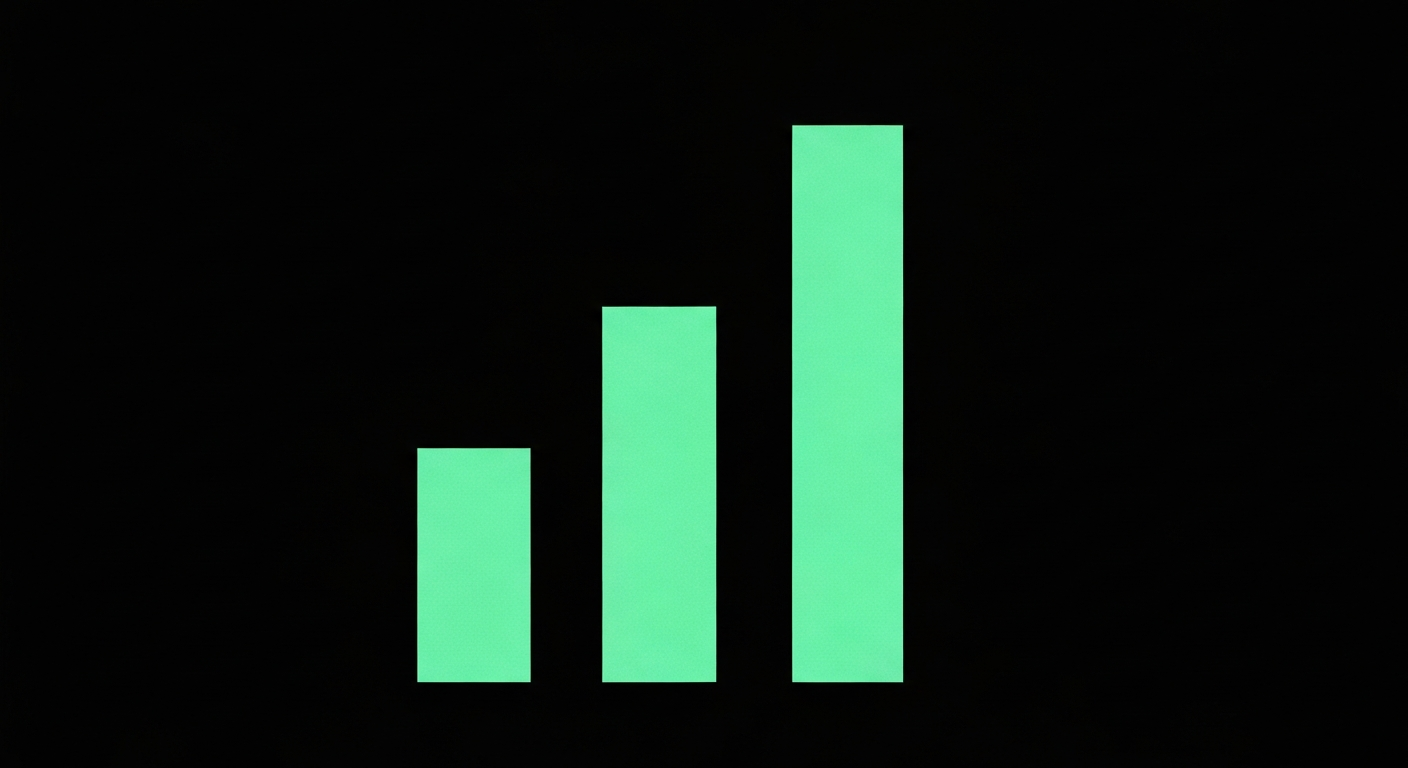
| Configuration | 30-minute burn | Change vs unloaded |
|---|---|---|
| Unloaded walk | ~110 kcal | baseline |
| 10 lb vest | ~145 kcal | +32% |
| 20 lb vest | ~185 kcal | +68% |
Modern validation work suggests the original equation often under-predicts contemporary load-carriage cost. Drain et al. (2017) reported under-prediction (12-33% across speed-load combinations) in modern military populations, and this site uses a conservative x1.18 correction as a practical adjustment. Apply it to the 20 lb example and the session becomes roughly 218 kcal, or about 98% more than the unloaded walk.
That is the whole case for the vest in one table. Same person. Same pace. Same half hour. Nearly double the energy cost.
Why the vest burns disproportionately more
Pandolf is not just "walking calories plus vest weight." The equation includes a load term proportional to (W + L) x (L / W)^2, where W is body weight and L is carried load. The metabolic penalty grows faster than a simple one-for-one increase in mass.
That fits the mechanics. A vest does not only ask the legs to move more weight forward. It also asks the trunk to resist sway, the hips to stabilize harder, and the posterior chain to control every step. Walking becomes locomotion plus low-grade resistance work, with concentric and eccentric effort repeated for the full 30 minutes.
The compound benefits
Calories are the easiest benefit to quantify, but they are not the only reason vest walking is attractive.
Bone loading: The evidence is still emerging, and the strongest studies are on weighted-vest exercise programs rather than casual walking alone. Snow et al. (2000) found that a long-term weighted-vest-plus-jumping program helped preserve hip bone mineral density in postmenopausal women, which is one reason loaded exercise keeps drawing interest in osteopenia prevention.
Posterior-chain demand: Compared with unloaded walking, load carriage asks more from the glutes, hamstrings, spinal erectors, and upper back. That does not replace strength training, but it moves the session meaningfully away from "just steps."
Postural work: A vest will not build grip strength the way carries or rows do. But a close-fitting vest does bias more work toward the shoulder girdle and upper back because the load must be controlled for the full session.
Time efficiency: If a 20 lb vest takes a walk from roughly 110 kcal to roughly 218 kcal in the same 30-minute block, the return on that block changes materially. That fits the broader strategy in NEAT: the 500 calories you're not counting: make daily movement worth more without making the calendar impossible.
The caveats
The vest is useful because it adds stress. That also means you need to dose it like training, not like a costume.
Start with 10 lb, not 20 lb. Give yourself 4 to 6 weeks to adapt before treating 20 lb as normal. Tendons, feet, and connective tissue usually lag behind cardiovascular enthusiasm.
Watch the feet and ankles closely. Extra load magnifies ground contact, so small issues in footwear, gait, or tissue tolerance can show up faster than they do during unloaded walking.
Do not run with the vest. Running already carries higher impact and knee shear than walking; adding load is a poor trade for most people.
Skip the experiment, or get individualized medical guidance first, if you have meaningful lower-back pathology, balance problems, or unmanaged osteoporosis.
Comparison to running 30 minutes
Running still wins the pure calorie contest. A 180 lb adult running at 6 mph, or a 10-minute mile pace, burns roughly 340 kcal in 30 minutes. The corrected 20 lb vest walk lands around 218 kcal.
So if the only question is "which burns more right now," running wins.
But running also has a higher recovery and tissue-tolerance cost. For longevity-focused training, vest walking is attractive because it raises output while keeping the movement pattern simple and relatively low impact. That often means better adherence across months, not just better numbers on one hard day.
Practical setup
Use a vest that fits close to the body and does not bounce. Bounce turns useful loading into rubbing, bruising, and distraction.
Then estimate your own numbers with the weighted vest calculator. If you want to translate the burn into food decisions, pair it with the buy-back calculator. If you are moving into 45- to 90-minute load-carriage sessions, use the rucking calculator.
The bigger frame
Time-efficient exercise is a sustainability problem first. Most people do not fail because they cannot design an impressive program. They fail because the program asks for more time, recovery, or motivation than real life keeps giving them.
That is why the weighted vest deserves attention. It upgrades a habit people already understand and often already do. Instead of needing a new commute to the gym, a new skill, or a new hour in the day, it nearly doubles the payoff of the walk you were going to take anyway.
The hype is real enough to matter, but not magical. A vest will not replace strength training, fix a poor diet, or make joint limits disappear. What it can do is make one of the most repeatable forms of exercise far more productive for people who only have 30 minutes.
Citations
- Pandolf, K. B., Givoni, B., & Goldman, R. F. (1977). "Predicting energy expenditure with loads while standing or walking very slowly." Journal of Applied Physiology, 43(4), 577-581.
- Ainsworth, B. E., et al. (2011). "2011 Compendium of Physical Activities: a second update of codes and MET values." Medicine & Science in Sports & Exercise, 43(8), 1575-1581.
- Drain, J. R., Aisbett, B., Lewis, M., & Billing, D. C. (2017). "The Pandolf equation under-predicts the metabolic rate of contemporary military load carriage." Journal of Science and Medicine in Sport, 20(Suppl), S104.
- Snow, C. M., Shaw, J. M., Winters, K. M., & Witzke, K. A. (2000). "Long-term exercise using weighted vests prevents hip bone loss in postmenopausal women." Journal of Gerontology: Medical Sciences, 55(9), M489-M491.