
If you’ve ever finished a heavy 12-mile ruck, drenched in sweat and feeling like your legs were made of lead, only to look at your fitness watch and see it credited you with the same calories as a casual stroll through the park, you’ve experienced the "MET gap."
In the world of rucking, weighted vests, and military fitness, we often obsess over the gear: the density of the Cordura, the curve of the frame sheet, or the moisture-wicking properties of our socks. But when it comes to the data—specifically, how much energy we are actually burning—we are often operating on "voodoo math." Most consumer-grade wearables and apps are fundamentally ill-equipped to handle the physics of load carriage. They rely on generalized models that were never intended to account for a 45-pound plate strapped to your back.
To understand why your watch is lying to you, we have to look at the two competing ways of measuring human movement: the standard MET-based approach used by Silicon Valley, and the 1977 Pandolf equation developed by the US Army. One is built for "wellness"; the other is built for "work."
The MET Problem: Why standard wearables fail
Most fitness trackers—whether it’s an Apple Watch, a Garmin, or a Fitbit—rely on a system called Metabolic Equivalents (METs). The MET system is a brilliant piece of simplification. It defines 1 MET as the amount of oxygen consumed (and thus calories burned) while sitting quietly at rest.
From there, every activity is assigned a multiplier. Walking at 3.0 mph on a flat surface is roughly 3.5 METs. Jogging at 6.0 mph is 9.8 METs. The formula for your hourly burn is simple:
Calories = METs × Bodyweight (kg) × Time (hours)
This works reasonably well for general activities because for most people, "walking" is just walking. But as soon as you add a ruck, the MET system breaks.
Most wearables use your heart rate or GPS speed to "guess" your MET value. If you are rucking 50 lbs at 3 mph, your heart rate will be elevated, and the watch might notice that. It might bump you from a "slow walk" MET to a "brisk walk" MET. But it doesn't actually know you’re carrying a load. It sees a 180-lb man walking at 3 mph and calculates the caloric cost for a 180-lb man walking at 3 mph.
The weight in your pack is "invisible" to the MET formula. Even if you manually change the activity to "Hiking," most apps simply apply a slightly higher static MET multiplier. They don't account for the non-linear way that external load increases metabolic cost. Carrying 30% of your body weight doesn't just increase your burn by 30%—it changes the very mechanics of your gait and the efficiency of your cooling, leading to a much higher caloric "tax" than a simple multiplier can capture.
The Pandolf Equation: The Army’s "Golden Rule"
In 1977, researchers at the U.S. Army Research Institute of Environmental Medicine (USARIEM), led by Ken Pandolf, published a landmark study: "Predicting energy expenditure with loads while standing or walking very slowly."
The Army had a very practical problem: they needed to know how much food and water to give soldiers so they wouldn't collapse during long movements. They needed a model that accounted for body weight, load weight, speed, terrain, and grade.
The result was the Pandolf equation:
M = 1.5·W + 2.0·(W+L)·(L/W)² + η·(W+L)·(1.5·V² + 0.35·V·G)
It looks intimidating, but let’s break down the variables:
- W: Your body weight (kg).
- L: Your load weight (kg).
- V: Your speed (meters per second).
- G: The grade or incline (%).
- η (eta): The terrain factor.
The terrain factor is the "secret sauce." Pandolf recognized that rucking on a paved road (η = 1.0) is vastly different from rucking through a swamp (η = 1.8) or soft sand (η = 2.1).
Notice the second term in the equation: 2.0·(W+L)·(L/W)². This is the "load carriage" penalty. It’s not linear. Because the load (L) is squared in relation to your body weight (W), the cost of carrying weight increases exponentially as the load gets heavier relative to the person carrying it. This is exactly what the MET system misses. A 150-lb person carrying 50 lbs is working much harder than a 250-lb person carrying the same 50 lbs, even if they are moving at the same speed. Pandolf captures this; your Garmin does not.
The Modern Correction: Why 1977 wasn't enough
For decades, the Pandolf equation was the undisputed king of load-carriage math. However, modern validation studies have started to reveal a consistent flaw: Pandolf is too optimistic.
A 2017 study by Drain et al., published in the Journal of Science and Medicine in Sport, compared the Pandolf equation against actual oxygen-consumption measurements in contemporary military personnel. They found that the original 1977 equation consistently under-predicted energy expenditure by 12% to 33%.
Why the discrepancy?
- Subject Selection: The original 1977 study used highly trained, "military-fit" subjects in peak condition. Their movement economy was likely higher than the average person picking up a ruck today.
- Modern Gear: The "loads" in 1977 were often carried in different configurations than today’s ergonomic rucksacks or body-hugging weighted vests.
- The Fatigue Factor: Pandolf was often tested in shorter, controlled bursts. In the real world, as you fatigue, your form breaks down. A "tired" gait is an inefficient gait, and inefficient gaits burn more fuel.
When researchers like Drain applied a correction factor to the Pandolf model, the accuracy skyrocketed. This "Modified Pandolf" is what separates serious rucking tools from generic fitness trackers.
Real-World Numbers: The "Wearable Tax"
To see the difference this makes in your daily life, let’s look at a worked example.
The Subject: A 180 lb (81.6 kg) man. The Ruck: 30 lb (13.6 kg). The Movement: 3.0 mph (1.34 m/s) for 60 minutes on level pavement (G=0, η=1.0).
1. The MET-only Estimate (What your watch shows)
Using the Ainsworth Compendium of Physical Activities, "walking, 3.0 mph, level, moderate pace, firm surface" is assigned a MET value of 3.5.
- Calculation: 3.5 METs × 81.6 kg × 1 hour = ~285 kcal.
- Adjustment: Even if the watch "notices" your heart rate is higher and bumps you to a 4.5 MET "brisk walk," you’re still only looking at ~367 kcal.
2. The Raw Pandolf Estimate (The 1977 Army Math)
Plugging these numbers into the Pandolf formula:
- M = 1.5(81.6) + 2.0(81.6+13.6)(13.6/81.6)² + 1.0(81.6+13.6)(1.5 · 1.34² + 0.35 · 1.34 · 0)
- M = 122.4 + 5.29 + 256.4 = 384 Watts.
- Conversion: 384 Watts for 60 mins = ~330 net kcal (plus your BMR).
- Total Burn: Total expenditure for the hour is roughly ~530 kcal.
3. The Corrected Pandolf (The Drain et al. Validation)
If we apply a conservative 18% correction factor (the midpoint of the Drain findings) to account for modern movement economy and fatigue:
- Calculation: 530 kcal × 1.18 = ~625 kcal.
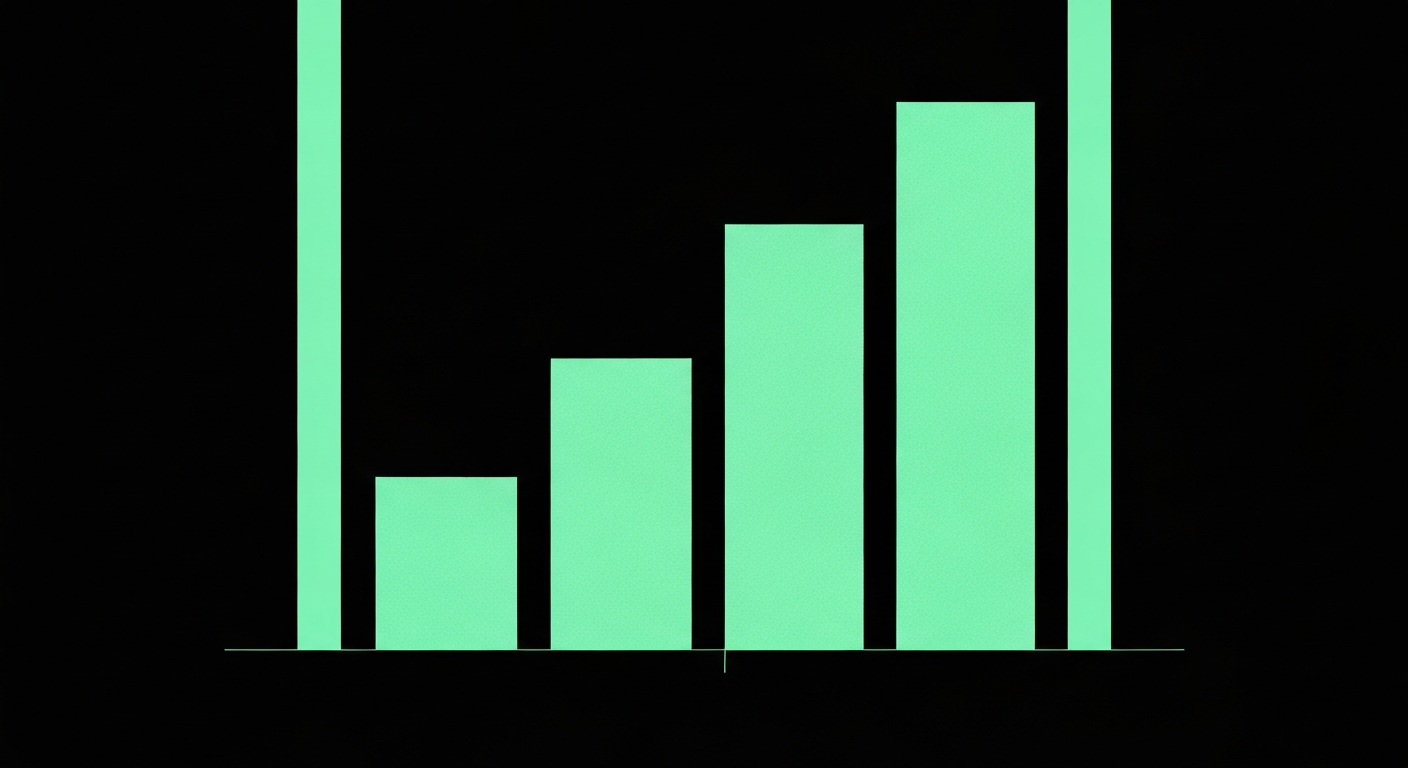
The Verdict: Your standard wearable says you burned 367 kcal. The corrected Pandolf math says you burned 625 kcal.
That is a 70% difference. If you are using your watch to track your "calories out" while rucking, you are under-reporting your effort by nearly half.
When the difference actually matters
Is this just academic nitpicking? Not if you’re trying to manage your body composition.
If you are aiming for a 500 kcal/day deficit to lose body fat, and you go for a 60-minute ruck, your watch tells you that you have "earned" 367 calories. You might eat back those calories or use them to justify a slightly larger dinner. But in reality, you burned 625.
Over the course of a week with three rucks, that’s an extra 774 calories of "untracked" expenditure. For someone trying to hit a specific deficit, this is the difference between feeling chronically under-recovered and "crashing," and having a sustainable, high-energy fat-loss phase.
Conversely, for military athletes or long-distance hikers (thru-hikers), underestimating burn means under-fueling. If you think you're burning 3,000 calories a day but you're actually burning 4,500 because of the load, you are going to hit a wall—hard—within 72 hours.
Practical Implications for Your Training
So, how do you apply this to your own rucking?
1. Check your wearable's methodology
If your watch has a "Rucking" or "Weighted Vest" mode, dig into the manual. Most of them are simply doing MET × (Body + Load). While better than ignoring the weight entirely, this is still fundamentally flawed because it assumes the metabolic "uplift" of mass is linear. As the Pandolf equation shows, the relationship between load and body weight is squared (L/W²). The heavier the pack, the more the "linear" models fail.
2. Use Pandolf-based tools
For trip planning, weight-loss math, or performance fueling, use a tool designed for load carriage. We’ve built a free rucking calculator that uses the corrected Pandolf math to give you a more honest look at your output. If you are doing shorter walks with a weighted vest to "buy back" some caloric flexibility, see our calorie buy-back tool.
3. Don't "chase" the watch
Stop trying to get your Garmin or Apple Watch to show the "right" number. It won't. Instead, treat your wearable as a heart-rate and GPS tracker, and use external math to determine your actual caloric needs.
Why CalBurndown uses Pandolf
At CalBurndown, our entire philosophy is built on "body-calibrated math." We aren't interested in the "average" human moving at an "average" speed. We are interested in your physics.
We chose the Pandolf model (with modern corrections) because it respects the reality of load carriage. It recognizes that terrain matters, that pack weight matters, and that the interaction between the two is complex. This ties into our broader theme of photo calorie counter accuracy—the idea that "magic" (like AI or fitness watches) is only useful if it’s anchored in honest science. If your input (calories in) and your output (calories out) are both based on flawed models, your health "accounting" will never balance.
The Caveats: Where Pandolf Hits the Wall
No model is perfect. Pandolf is the king of walking, but it has boundaries:
- Grade Limits: The equation starts to lose accuracy on very steep inclines (>15–20%). For mountain rucking, models like the Santee equation are often preferred.
- Running: Pandolf was designed for walking. If you are doing "Shuffle" intervals or rucking at a jog, the mechanics change, and the Looney equation or other running-load models are more appropriate.
- Extreme Loads: If you are carrying 50%+ of your body weight, the metabolic cost becomes highly variable based on individual skeletal strength and core stability, which no formula can perfectly predict.
The Bottom Line
Rucking is a high-efficiency tool for building work capacity and burning fat precisely because it is so "expensive" for the body. Don't let a generic MET-based formula rob you of the credit for that work.
The Pandolf equation might be nearly 50 years old, but it remains the most robust foundation we have for understanding the cost of carrying weight. By moving away from "walking math" and toward "load math," you can finally start fueled, recovered, and honest about your progress.
Citations
- Pandolf, K. B., Givoni, B., & Goldman, R. F. (1977). "Predicting energy expenditure with loads while standing or walking very slowly." J Appl Physiol 43(4):577-581.
- Drain, J. R., Aisbett, B., Lewis, M., & Billing, D. C. (2017). "The Pandolf equation under-predicts the metabolic rate of contemporary military load carriage." J Sci Med Sport 20 Suppl 4:S104-S108.
- Ainsworth, B. E., et al. (2011). "2011 Compendium of Physical Activities: A second update of codes and MET values." Med Sci Sports Exerc 43(8):1575-1581.